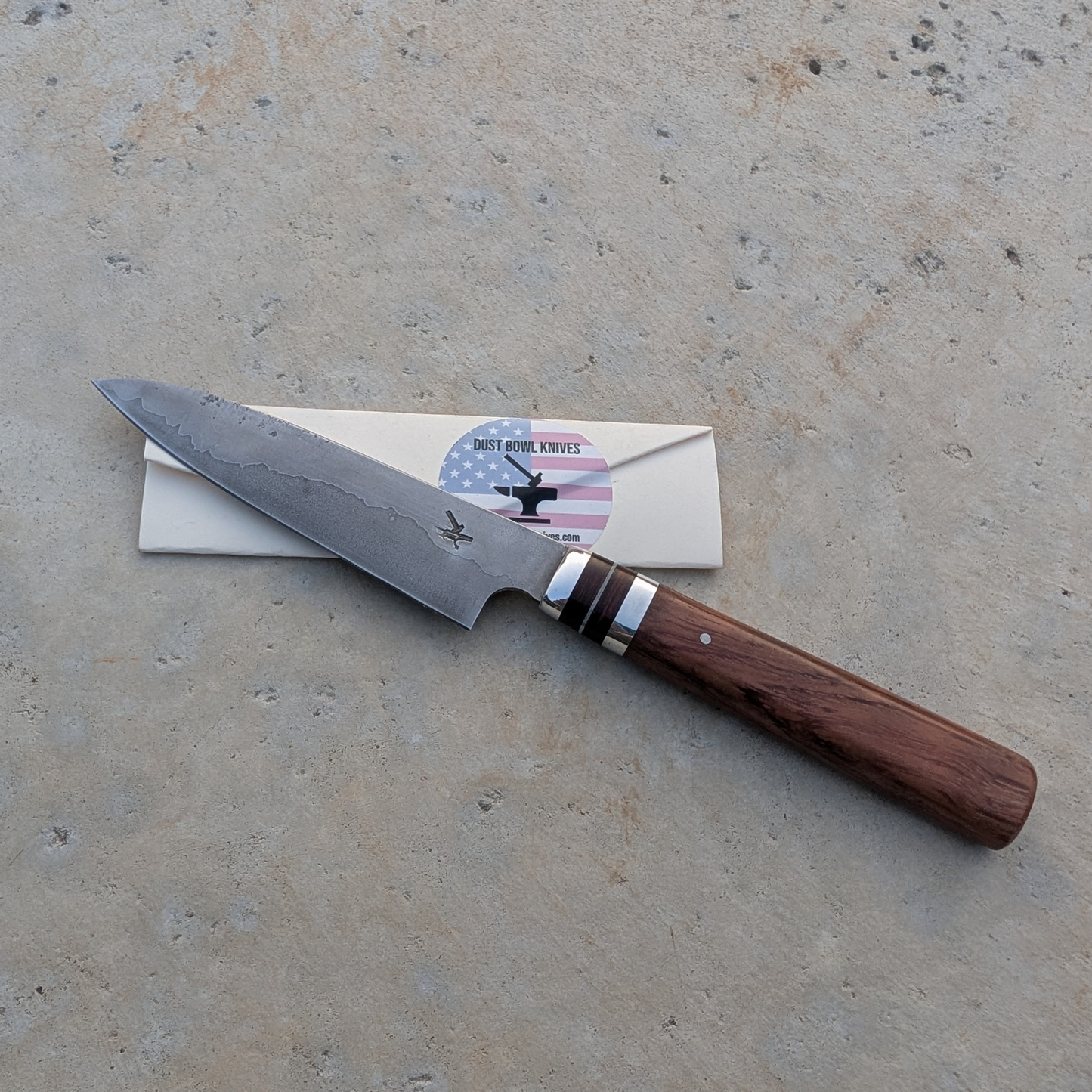
130mm Petty Knife, Mild Steel Clad , Eucalyptus Handle
Couldn't load pickup availability
Military & First Responders get a 10% discount! click to verify.
Materials
Materials
Handle Material: Figured Eucalyptus Wood
Handle Accents / Spacers: Polished Aluminum Spacers with Dark Composite & Red/Brown Accent Rings
Sheath / Saya: N/A (Without Saya)
dimensions
dimensions
Overall Length: 11" (279 mm)
Blade Length: 5 ¼" (133 mm)
Handle Length: 5 ¼" (133 mm)
Weight: 3.8 oz (108 g)
This exceptional Petty knife features a razor-sharp O1 high-carbon tool steel core, expertly clad in mild steel. This traditional cladding technique insures extended edge retention while at the same time providing a well dampened spine that protects the core steel from unexpected impact. The striking visual effect completes the look of this blade. It is balanced perfectly by a figured Eucalyptus wood, composite dark red and brown spacers, and an aluminum collar.
0726015
care instructions
care instructions
Cleaning: Hand-wash the blade immediately after each use with mild dish soap and warm water, focusing on removing any acidic or salty residue that can quickly cause oxidation.
Drying: Thoroughly dry the entire knife, including the blade, handle, and bolster area, with a clean, lint-free cloth; never leave the knife in a sink or soak it, as moisture trapped in the handle can lead to swelling, cracking, or rot.
Handle Care: Apply a food-safe mineral oil or high-quality wood finish to the handle periodically to nourish the wood and maintain a protective barrier against moisture and environmental changes.
Blade Protection: When the blade is clean and completely dry, apply a thin layer of food-grade mineral oil or camellia oil to the carbon steel to prevent rust during storage.
Storage: Store the knife in a dry environment, such as a wooden knife block, on a magnetic wall strip, or in a knife roll; avoid storing it in a drawer where it can clash with other utensils, which risks damaging the edge or handle.
Sharpening: Maintain the edge using traditional, freehand sharpening techniques on natural Japanese whetstones; avoid pull-through sharpeners or electric grinding wheels, which can ruin the geometry and finish of high-carbon damascus blades.
Usage Constraints: Use the knife strictly for cutting food on wooden cutting board; avoid cutting through bone, frozen foods, or hard surfaces to prevent chipping or edge damage.
Share