Skip to product information
1 of 9

Aiiwatani Tomae Kiita #020

Aiiwatani Tomae Kiita #020

Regular price $140.00 USD
Regular price Sale price $140.00 USD
Sale Sold out
Shipping calculated at checkout.

Free U.S. shipping on orders over $500

GOVX ID Military & First Responders get a 10% discount! Click to verify.

dimensions

Dimensions: 155mm x 94mm x 20mm
Weight: 753g

Stone Identification & Origin
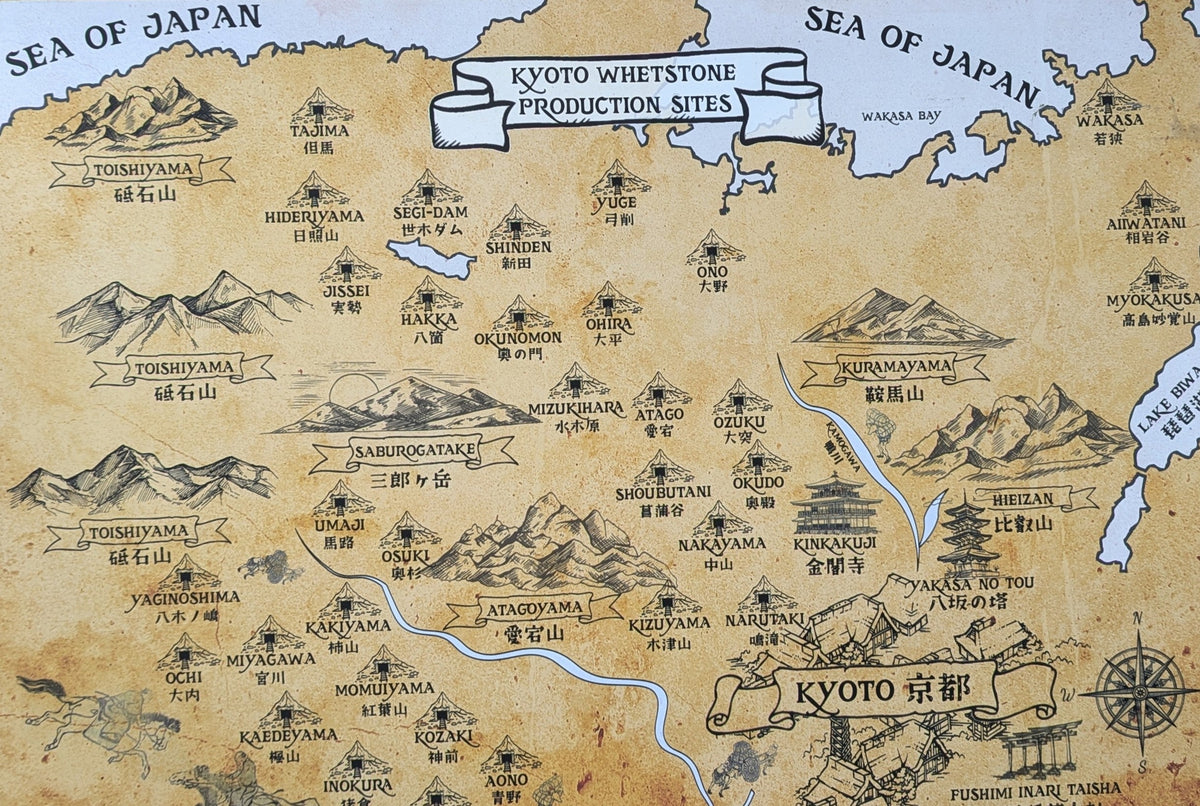
Mine/Origin: Aiiwatani (相岩谷産), stamped clearly in kanji (相岩谷産 - Aiiwatani-san). Aiiwatani stones hail from Kyoto's western/central mining regions.
Type/Strata: Kiita / Suita-adjacent fine finishing stone, showing characteristic warm buff-yellow coloration (Kiita) with subtle concentric ring patterning (Tam Tam / Ring pattern).
Intended Use: A pre-finisher to fine finisher (approx. 5,000–8,000+ grit equivalent) for kitchen knives, razors, or woodworking tools (chisels/planes).
Visual Assessment & Flaws
Shape / Format: Irregular bench stone / Koppa shape. One corner is cut at an angle, and the base narrows slightly.
Chipping & Edge Wear: Visible chipping along the bottom corners and bottom edge. The bottom right edge in particular has jagged step fractures, but the base is stable and unaffected by this.
Surface Condition: The top face is flat with light micro-pitting/speckling and natural color banding. No prominent toxic quartz lines or structural cleavage cracks visible across the working face.
Base & Sides: The underside is unworked and rough (natural skin/strata separation). All sides and bottom have been sealed with clear lacquer. 

care instructions

​Initial Inspection & Cleaning: Before use, gently inspect your Japanese natural whetstone (JNAT) for any loose grit or debris, and wash the surface with clean water and a soft brush.
​Soaking Guidelines: Understand your specific stone's hardness; softer stones (like Aizu or Amakusa) generally require a brief soak of 10 to 20 minutes, while harder, finer finishing stones (like Tomae or Suita) often perform best as splash-and-go stones requiring only surface hydration.
​Avoiding Thermal Shock: Never submerge a cold or dry stone in hot water, and avoid exposing your JNAT to extreme temperature shifts, which can cause cracking or structural failure.
​Slurry Generation: Build a natural abrasive slurry using a diamond plate, coarse stone, or a matching nagura (such as a Tsushima Nagura) to jump-start cutting action and condition the surface for your blade steel.
​Water Maintenance: Keep the stone adequately lubricated with clean water throughout the sharpening session, periodically rinsing away accumulated swarf to maintain optimal feedback and cutting speed.
​Drying Process: After sharpening, rinse the stone thoroughly under clean running water and allow it to dry completely in a well-ventilated, shaded area away from direct sunlight and artificial heat sources.
​Long-Term Storage: Store your dried JNAT in a stable environment where it won't be subjected to heavy impacts, freezing temperatures, or high humidity fluctuations that could compromise its integrity.

View full details