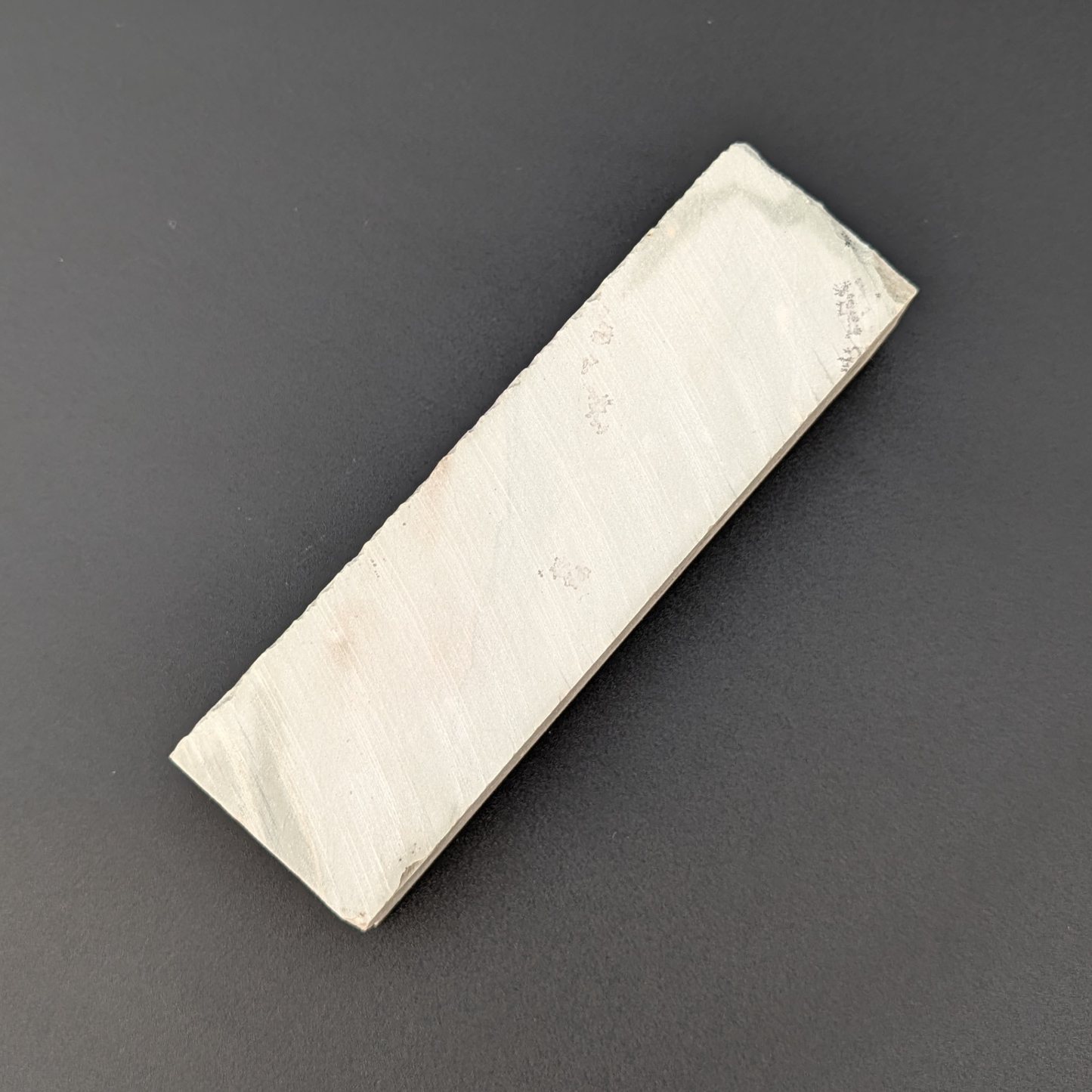
Aizu medium #002M
Aizu medium #002M
Free U.S. shipping on orders over $500
Couldn't load pickup availability

dimensions
dimensions
165 mm × 50 mm × 33 mm
Weight: 587g
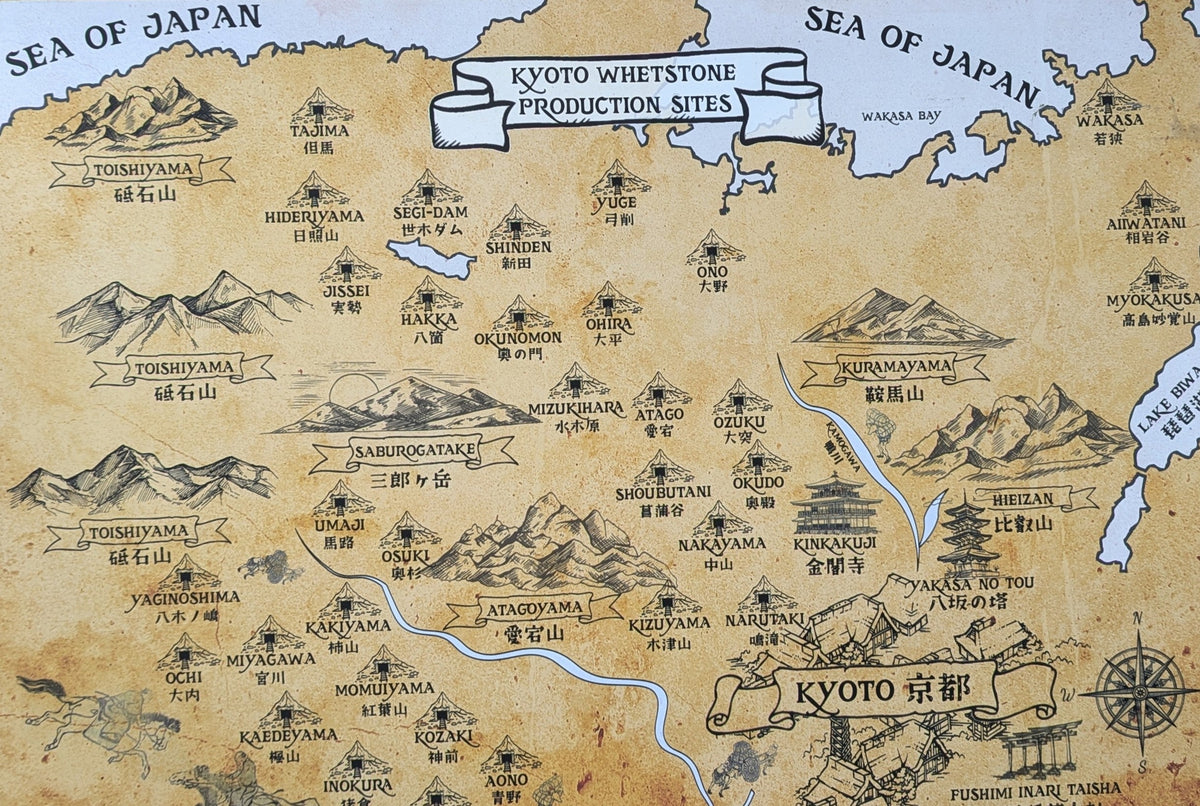
This is a medium sized Aizu-to (会津砥). It is a highly sought after medium-to-fine grit hone originating from Minami-Aizu, Fukushima Prefecture. It is comparable by feel to approx. ~1200–3000 grit synthetics , making it an outstanding bridge stone (Chu-to / Medium Finisher) between coarse bevel-setting and final polishing on ultra-fine Awasedo hones.
Key Characteristics of Aizu Stones:
Grit & Cutting Speed: Fast-cutting for a natural stone. It cleans up coarse scratch patterns quickly while refining the edge to a sharp, toothy ~3,000 grit finish.
Hardness: Lv. 3-3.5
Slurry & Tactile Feedback: Works up a It produces a soft, creamy slurry when used with a nagura. It provides a tactile, non-slick feel that gives high control over bevel angles.Leaves a beautiful, misty kasumi finish on clad knives (bringing out contrast between soft iron cladding and hard steel core).
care instructions
care instructions
Initial Inspection & Cleaning: Before use, gently inspect your Japanese natural whetstone (JNAT) for any loose grit or debris, and wash the surface with clean water and a soft brush.
Soaking Guidelines: Understand your specific stone's hardness; softer stones (like Aizu or Amakusa) generally require a brief soak of 10 to 20 minutes, while harder, finer finishing stones (like Tomae or Suita) often perform best as splash-and-go stones requiring only surface hydration.
Avoiding Thermal Shock: Never submerge a cold or dry stone in hot water, and avoid exposing your JNAT to extreme temperature shifts, which can cause cracking or structural failure.
Slurry Generation: Build a natural abrasive slurry using a diamond plate, coarse stone, or a matching nagura (such as a Tsushima Nagura) to jump-start cutting action and condition the surface for your blade steel.
Water Maintenance: Keep the stone adequately lubricated with clean water throughout the sharpening session, periodically rinsing away accumulated swarf to maintain optimal feedback and cutting speed.
Drying Process: After sharpening, rinse the stone thoroughly under clean running water and allow it to dry completely in a well-ventilated, shaded area away from direct sunlight and artificial heat sources.
Long-Term Storage: Store your dried JNAT in a stable environment where it won't be subjected to heavy impacts, freezing temperatures, or high humidity fluctuations that could compromise its integrity.
Share