Skip to product information
1 of 7

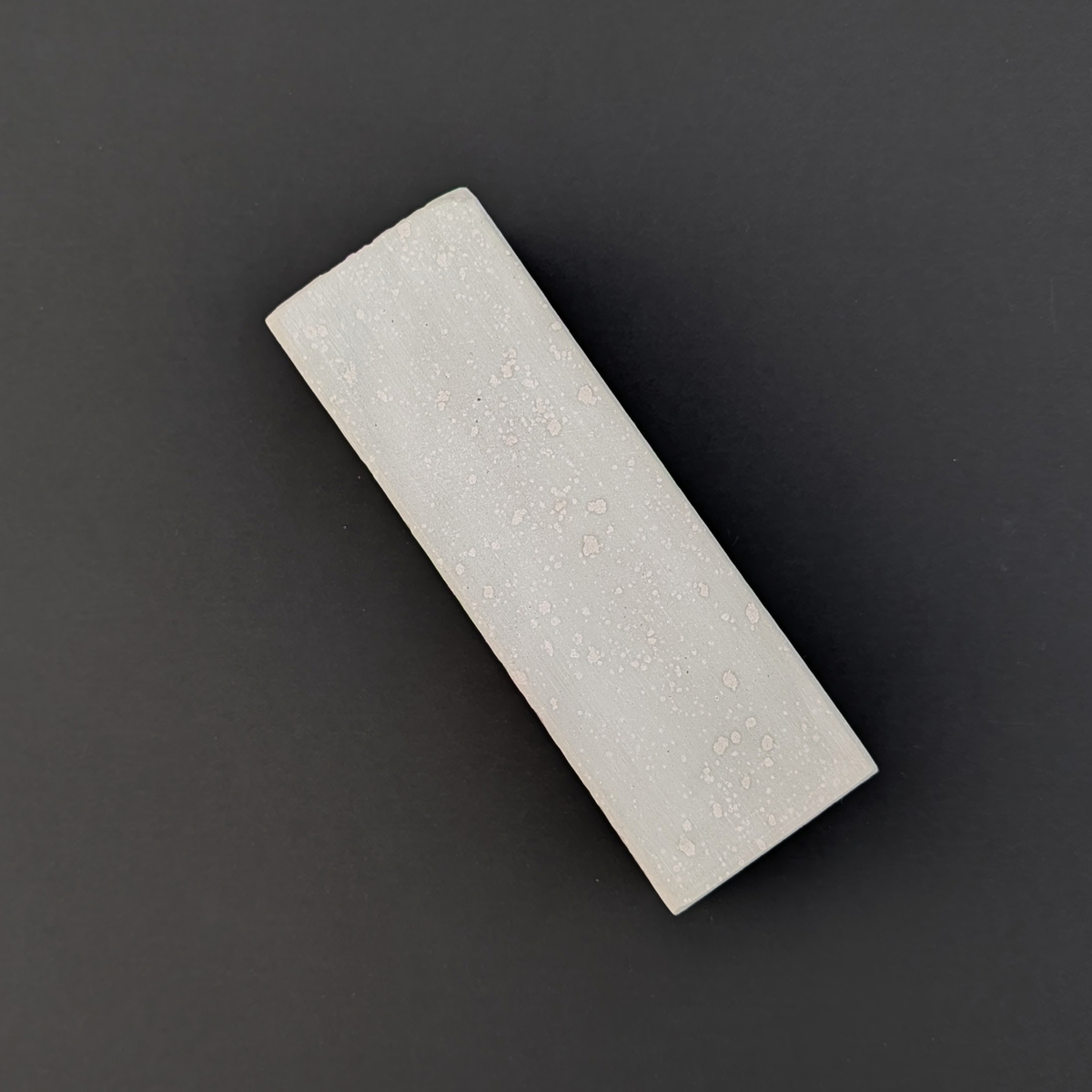
Aizu Large 24 Type #80146A24

Aizu Large 24 Type #80146A24

Regular price $280.00 USD
Regular price Sale price $280.00 USD
Sale Sold out
Shipping calculated at checkout.

Free U.S. shipping on orders over $500

GOVX ID Military & First Responders get a 10% discount! Click to verify.

dimensions

193mm x 67mm x 57mm
Weight: 1653g

This  is an Aizu-to (会津砥). It is a highly sought after medium-to-fine grit hone originating from Minami-Aizu, Fukushima Prefecture. It is comparable by feel to  approx. ~1200–3000 grit synthetics , making it an outstanding bridge stone (Chu-to / Medium Finisher) between coarse bevel-setting and final polishing on ultra-fine Awasedo hones.

Key Characteristics of Aizu Stones:

Grit & Cutting Speed: Fast-cutting for a natural stone. It cleans up coarse scratch patterns quickly while refining the edge to a sharp, toothy ~3,000 grit finish.

Hardness: Lv. 3-3.5

Slurry & Tactile Feedback: Works up a It produces a soft, creamy slurry when used with a nagura. It provides a tactile, non-slick feel that gives high control over bevel angles. Leaves a beautiful, misty kasumi finish on clad knives (bringing out contrast between soft iron cladding and hard steel core).

care instructions

1. Preparation & Water Management
Splash-and-Go Only: Never soak your natural finishing stone in a water bath. Prolonged submersion softens the natural binders and risks cracking or delamination along natural mineral lines.
Surface Wetting: Mist or splash clean water onto the working face just before sharpening. Add water sparingly throughout your session to maintain a slick working surface.
Bench Placement: Place the stone on a non-slip rubber base or a dedicated wooden stone holder with gentle clamping pressure.
2. Slurry Generation & Sharpening
Soft to Medium Stones (Hardness 2.5–3.5): These stones naturally release their own slurry under light blade pressure. Let the auto-generated mud do the work; do not wash it away mid-session.
b Use a diamond plate (such as an Atoma 1200), a clean Tomo Nagura, or a Mikawa Nagura to raise a thin, milky slurry in 5 to 10 light circular passes before laying your blade flat.
Pressure & Technique: Maintain light, even pressure. Allow the semi-rounded silica particles in the slurry to break down naturally—this self-refining action creates the signature toothy edge and cloudy kasumi finish.
Slurry Thickness: If the mud becomes too sticky or pasty, add a few drops of water. If it is too thin, work the stone lightly to concentrate the abrasive particles.
3. Cleaning, Drying & Long-Term Care
Rinse Clean: When finished, gently rinse off steel swarf and residual slurry using room-temperature tap water. Do not use dish soap, detergents, or hot water.
Air Dry Indirectly: Wipe the stone dry with a clean towel and allow it to dry completely at room temperature, away from direct sunlight, heating vents, fans, or freeze-thaw cycles.
Storage: Store the completely dry stone flat on a shelf in a climate-controlled room. Avoid enclosing a damp stone in an airtight plastic box.
Edge Lapping: Keep the working surface flat by lightly dressing it with a fine diamond plate (Atoma 1200 or 400) under running water when dish patterns begin to form. Chamfer the outer top perimeter edges lightly to prevent edge chipping during blade passes.

View full details