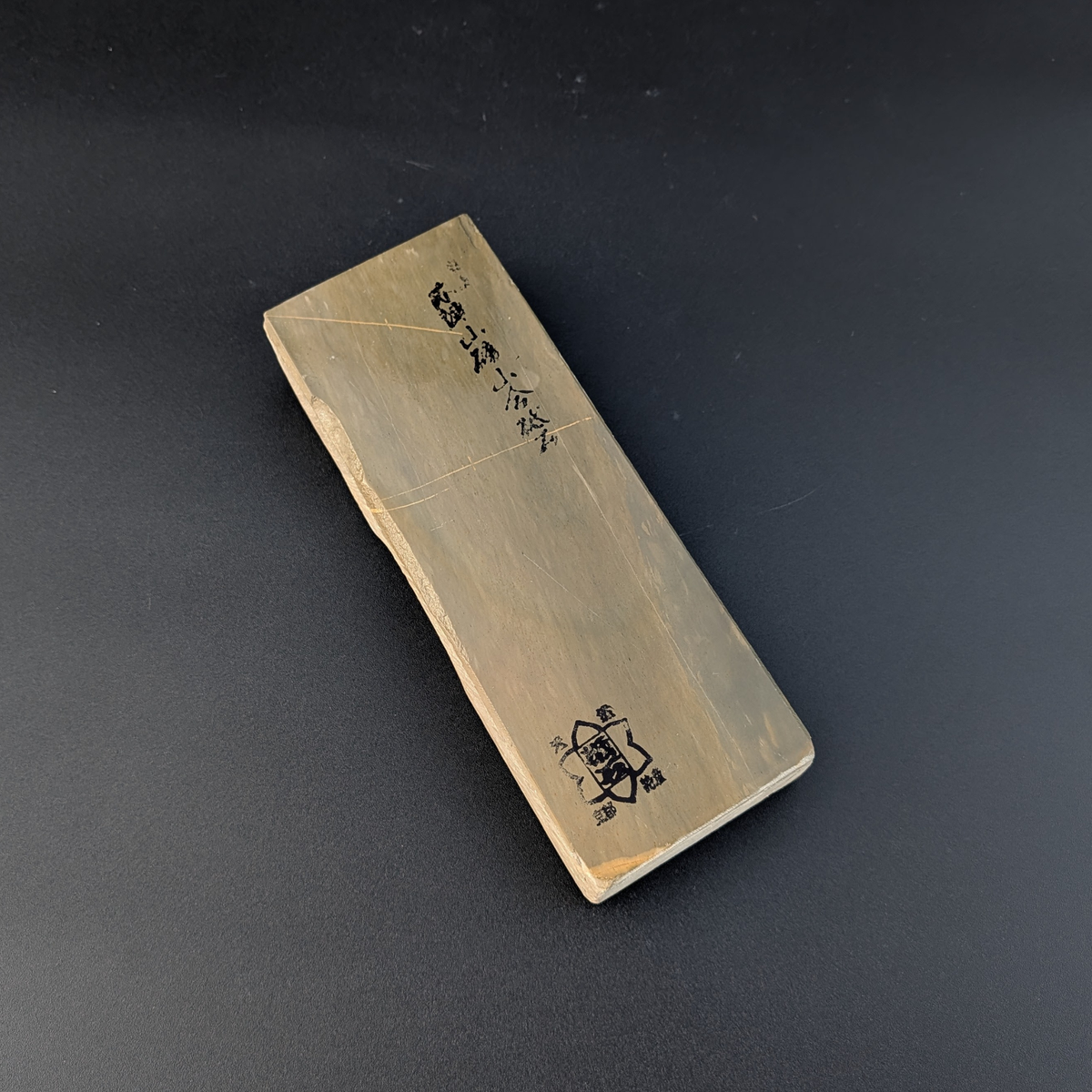
Kizuyama Asagi Tomae C_KIZ_60_4
Kizuyama Asagi Tomae C_KIZ_60_4
Free U.S. shipping on orders over $500
Couldn't load pickup availability
 Military & First Responders get a 10% discount! Click to verify.
dimensions
dimensions
Kizuyama Asagi Tomae C_KIZ_60_4
Classification & Origin:
Mine: Kizuyama, an Eastern mine (Higashi-mono) of Kyoto known for producing stones with exceptional cutting bite and fine, creamy feedback.
Stratum: Tomae, characterized by dense, fine sediment structure and strong polish/finishing capability.
Size Format: Full-size bench stone measuring 208mm × 76mm × 35mm at a substantial 1,427 grams—a true full-sized workshop block.
Stamp: Features the Kyoto specialty seal (Kyoto Tokusan) and authentic mine/distributor calligraphic ink marks.
Physical & Visual Characteristics:
Color: Ash-olive / khaki-grey (Asagi tone) with subtle warm undertones typical of deep-mine Tomae layers.
Top surface: Flattened and prepped.
Profile & Flanks: Parallel gang-saw crosscut marks on the edges, with natural quarry skin (kawa) and raw iron-tinted crust visible on the bottom reverse and lower edges.
Performance & Working Evaluation:
Hardness: Lv 4 to 4.5+ (solid, firm surface that resists dishing while self-slurrying slowly or with a diamond plate/Tomo nagura).
Finesse: Approx. 8,000–12,000+ grit, producing a refined, hazy kasumi contrast on clad kitchen knives and crisp, toothy edges on high-carbon cutlery, razors (kamisori), and woodworking tools (kanna/nomi).
Ergonomics: At 76mm wide and over 200mm long, it provides the full surface area needed for wide bevel work and full razor/plane blade sweeps without falling off the edge.
Flaws, Structural Risks & Imperfections:
Diagonal Surface Fissures (Suji): Two distinct diagonal lines cross the upper working face. These do not feel toxic or "hitting" but as this is a natiral material care must be taken to inspect them over time.
Perimeter Spall / Missing Shoulder: A noticeable natural notch/indentation along the left perimeter slightly reduces width in the upper third.
Lacquer sealed: The flanks and back are completely sealed.
Minor Edge/Corner Chips: Small step-fractures along the lower base and corners from quarry splitting/handling.
care instructions
care instructions