Asano Mikawa Nagura - Tenjou, Betsu-jo #3514d03s
Asano Mikawa Nagura - Tenjou, Betsu-jo #3514d03s
Free U.S. shipping on orders over $500
Couldn't load pickup availability
 Military & First Responders get a 10% discount! Click to verify.
dimensions
dimensions
Classification
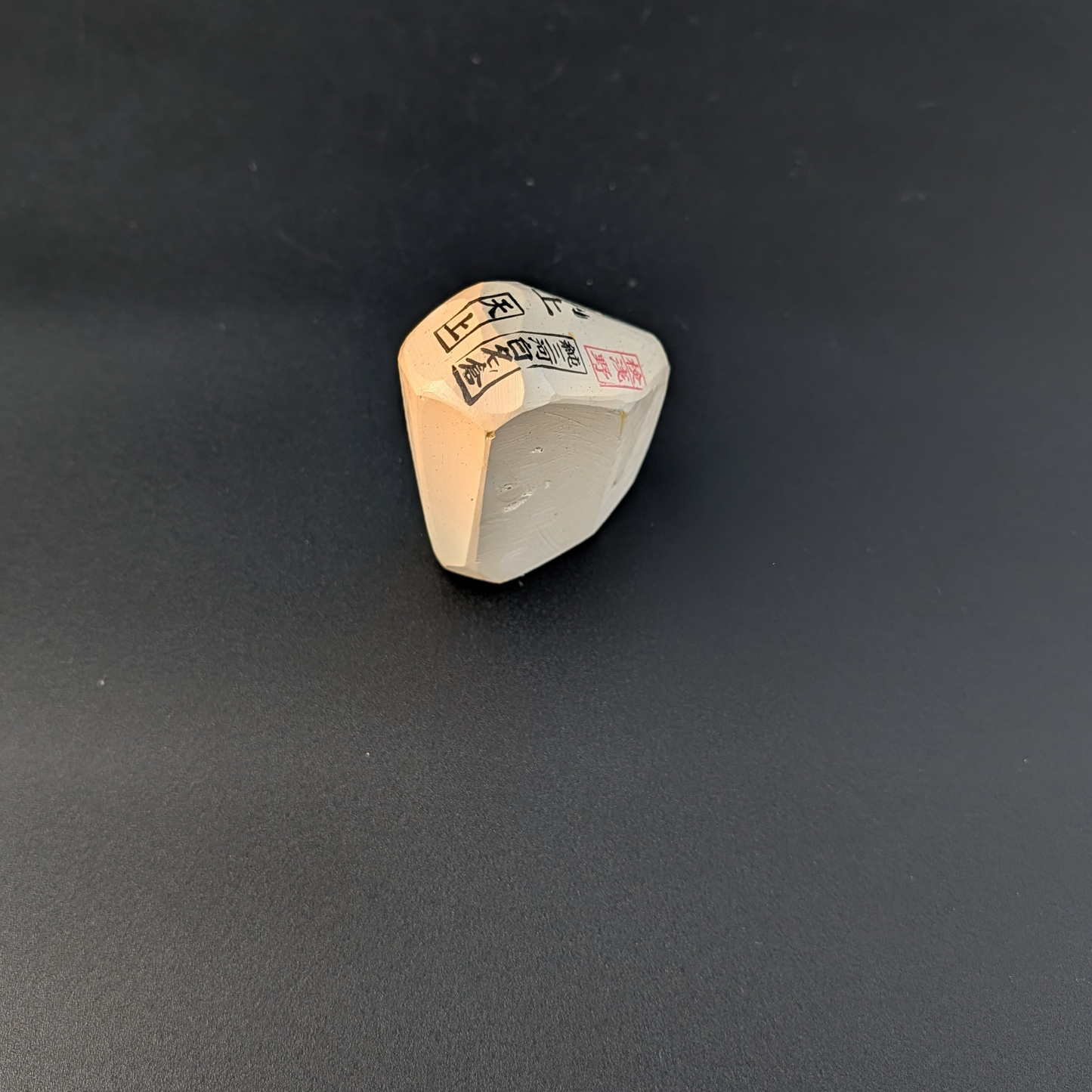
Type: Authentic Asano-stamped Mikawa Shiro Nagura (純三河白名倉)
Strata / Layer: Tenjō (天上)
Quality Grade: Betsu-jō (別上 - "Selected / Superior Grade")
Origin: Mikawa District, Aichi Prefecture, Japan
Weight: 217 grams
Dimensions: Approx.: 70mm x 50mm x 30mm (tapered irregular block)
Stamp Transcription & Verification
純三河白名倉 (Jun Mikawa Shiro Nagura): Authentic Pure Mikawa White Nagura origin mark.
天上 (Tenjō / Tenjou): Designates the Tenjō stratum—a fine, chalky, fast-breaking layer positioned between Meji and Koma in working grit, typically operating around the 5,000–8,000 grit range.
別上 (Betsu-jō): Quality designation signifying a higher purity grade free of coarse inclusions or damaging lines.
檢 浅野 (Ken Asano - Red Hexagonal Stamp): Official inspection seal of the Asano family testing guild, confirming authenticity and purity.
Evaluation & Description
Physical Characteristics: Dense, creamy-white to light buff matrix with clean, uniform coloring and crisp, intact kanji stamps. The shape is a solid, ergonomic hand-held block with pre-chamfered perimeter edges to prevent chipping.
Functional Profile: Tenjō provides an exceptionally smooth, creamy slurry when worked across hard finishing stones (Awasedo / Tomae). It excels at intermediate prep, removing shallow scratches from medium stones, refining straight razor bevels, and bringing out an even, semi-gloss kasumi contrast on cladding and core steels without deep rogue scratches.
Condition: Excellent, near-mint collector/user condition with zero visible toxic fissures, toxic quartz inclusions, or severe wear to the stamped face. Sealed with transparent lacquer.
care instructions
care instructions