Hon-Tajima Natural Whetstone #21097
Hon-Tajima Natural Whetstone #21097
Couldn't load pickup availability
 Military & First Responders get a 10% discount! Click to verify.
dimensions
dimensions
Hon-Tajima Natural Whetstone (天然但馬砥石)
Overview
An authentic, vintage Tajima Toishi (Hon-Tajima) sourced from the defunct quarries of Hyōgo Prefecture, Japan. Functioning as a traditional medium-grit stone (Chu-toishi, ~#800–#2,000 grit), Tajima is prized among blade sharpeners and woodworkers for yielding a fast, creamy slurry that produces a clean pre-polish and rich kasumi haze on clad steel bevels.
At over 5.2 lbs and full bench length, this massive block provides a wide, stable sharpening platform capable of handling large kitchen knives (gyuto, yanagiba) and broad woodworking plane irons (kanna).
Specifications
Type: Japanese Natural Whetstone (JNAT) / Medium Grit (Chu-toishi)
Origin: Tajima (但馬), Hyōgo Prefecture, Japan
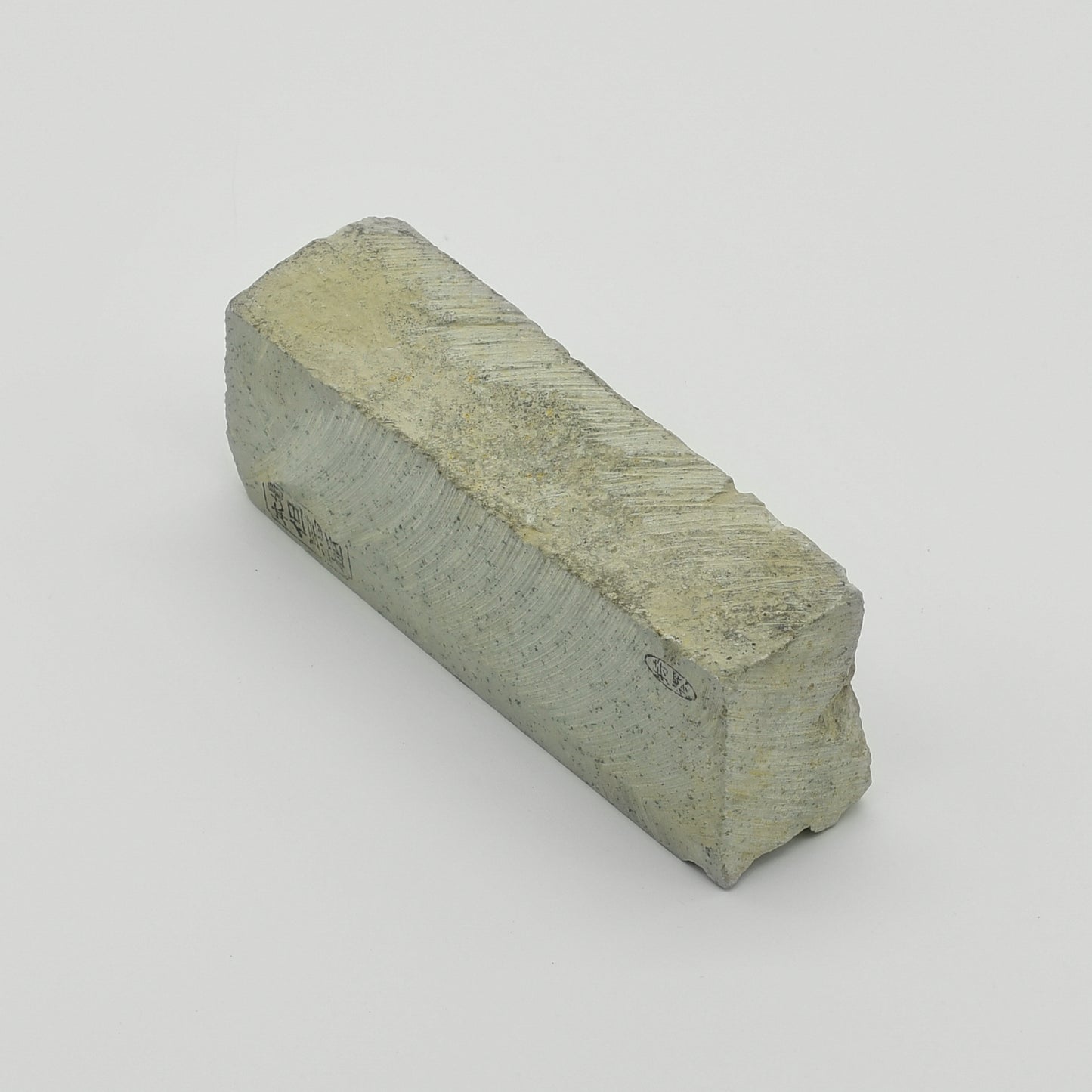
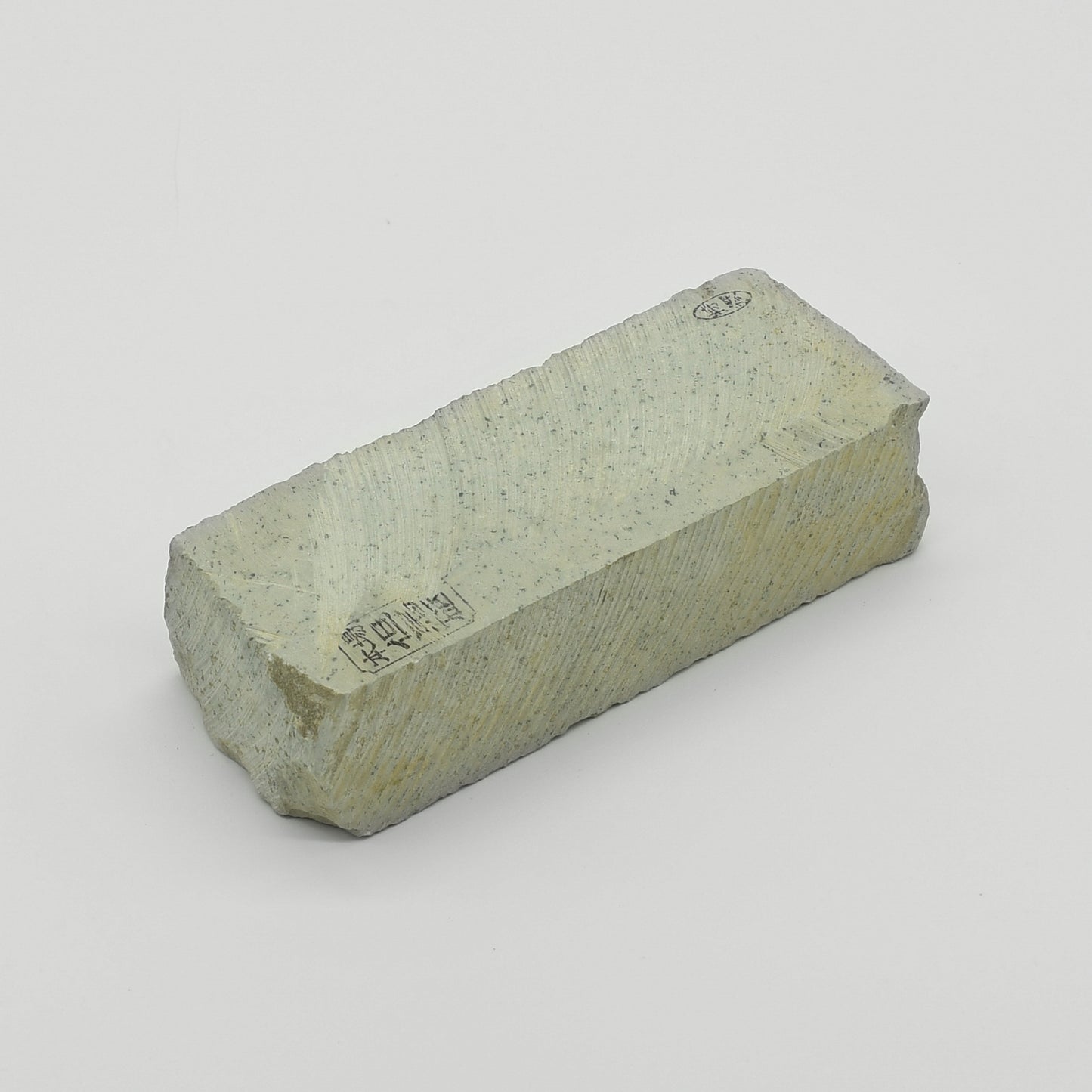
Markings: Prominent boxed Honba Tajima To (本場但馬砥) regional provenance stamp and side inspection seal
Dimensions: 8-1/4" × 3-1/8" × 2-1/4" (210 mm × 80 mm × 56 mm)
Weight: 5.20 lb (2,368 g)
Condition & Visual Details
Stamps: Clear, bold black-ink provenance stamp (Honba Tajima To) on the face and secondary oval inspection mark on the side.
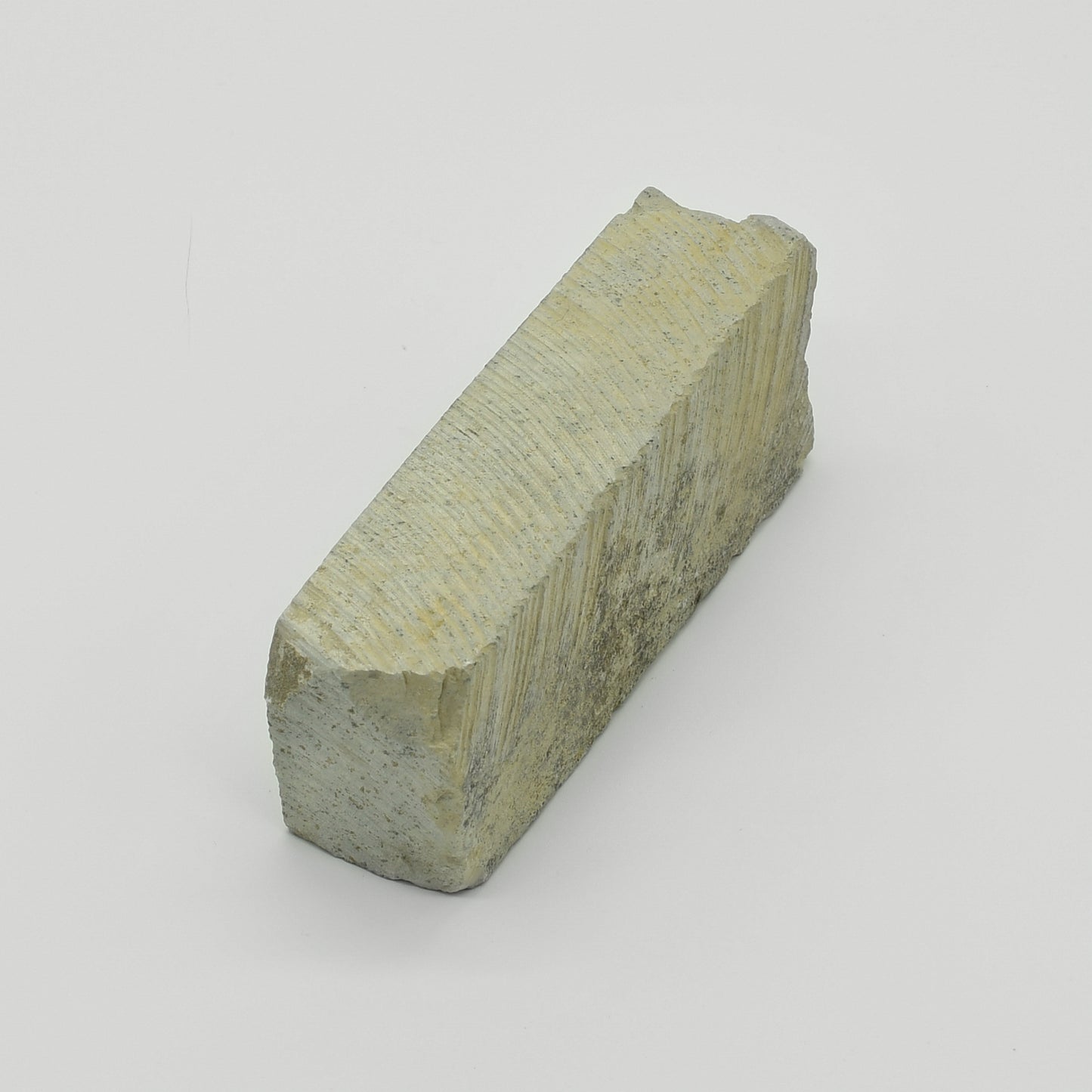
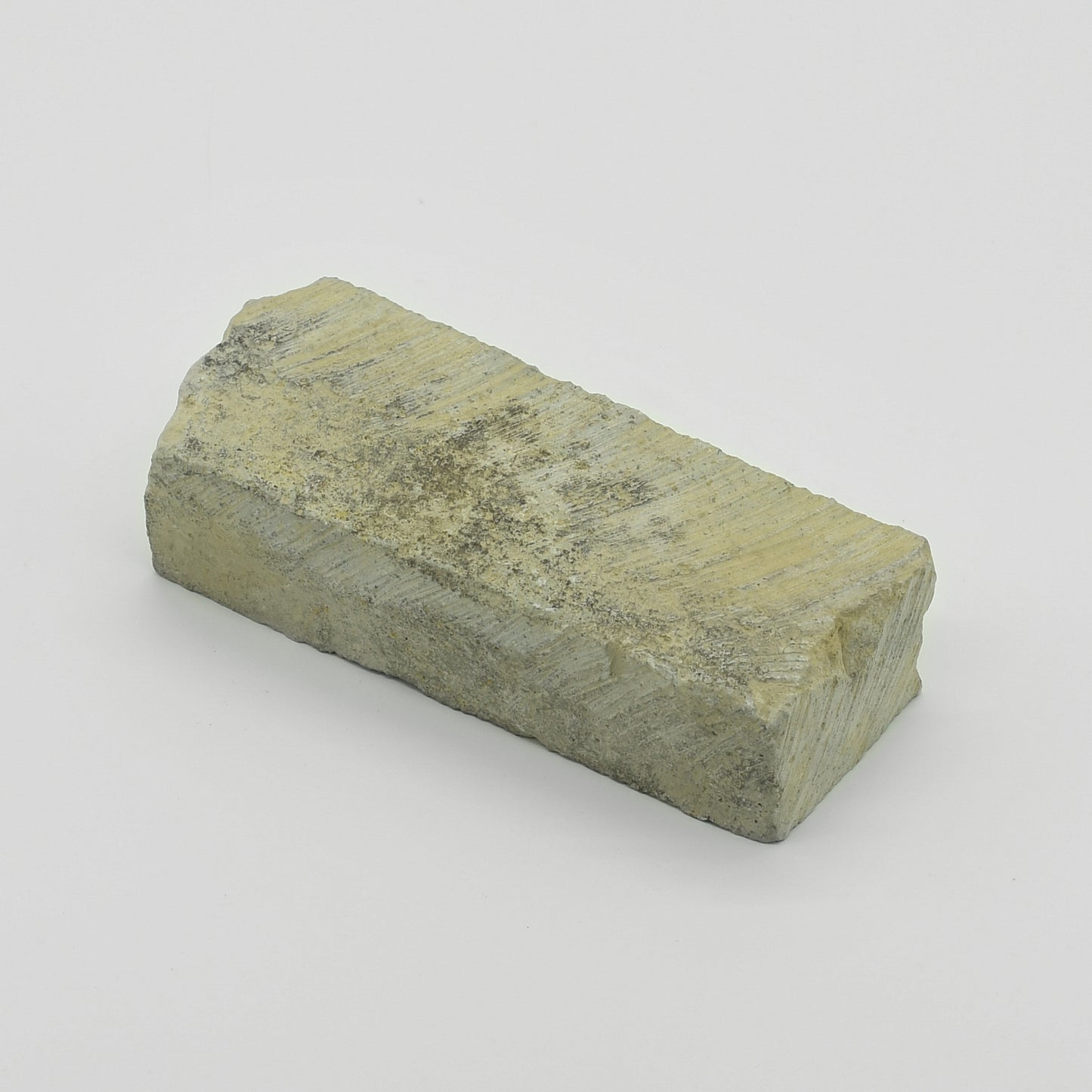
Matrix & Color: Pale greenish-ash volcanic body showing handsome golden-brown/tan oxidation and natural mineral staining across the sides and top.
Shape & Cut: Oversized bench block with an angled trapezoidal profile and prominent quarry saw ridges across both primary faces.
Flaws: Notable diagonal corner breakout/loss at one end, natural edge chippy areas, and raw quarry surface grooves (sold unlapped as-found).
care instructions
care instructions