Skip to product information
1 of 7

Shobudani Kiita Awasedo #056

Shobudani Kiita Awasedo #056

Regular price $210.00 USD
Regular price Sale price $210.00 USD
Sale Sold out
Shipping calculated at checkout.

Free U.S. shipping on orders over $500

GOVX ID Military & First Responders get a 10% discount! Click to verify.

dimensions

Length: 182 mm
Width: 66 mm
Thickness: 25 mm
Weigth: 688 g

Classification
Mine: Shobudani (菖蒲谷)
Type: Awasedo (合砥) finishing stone
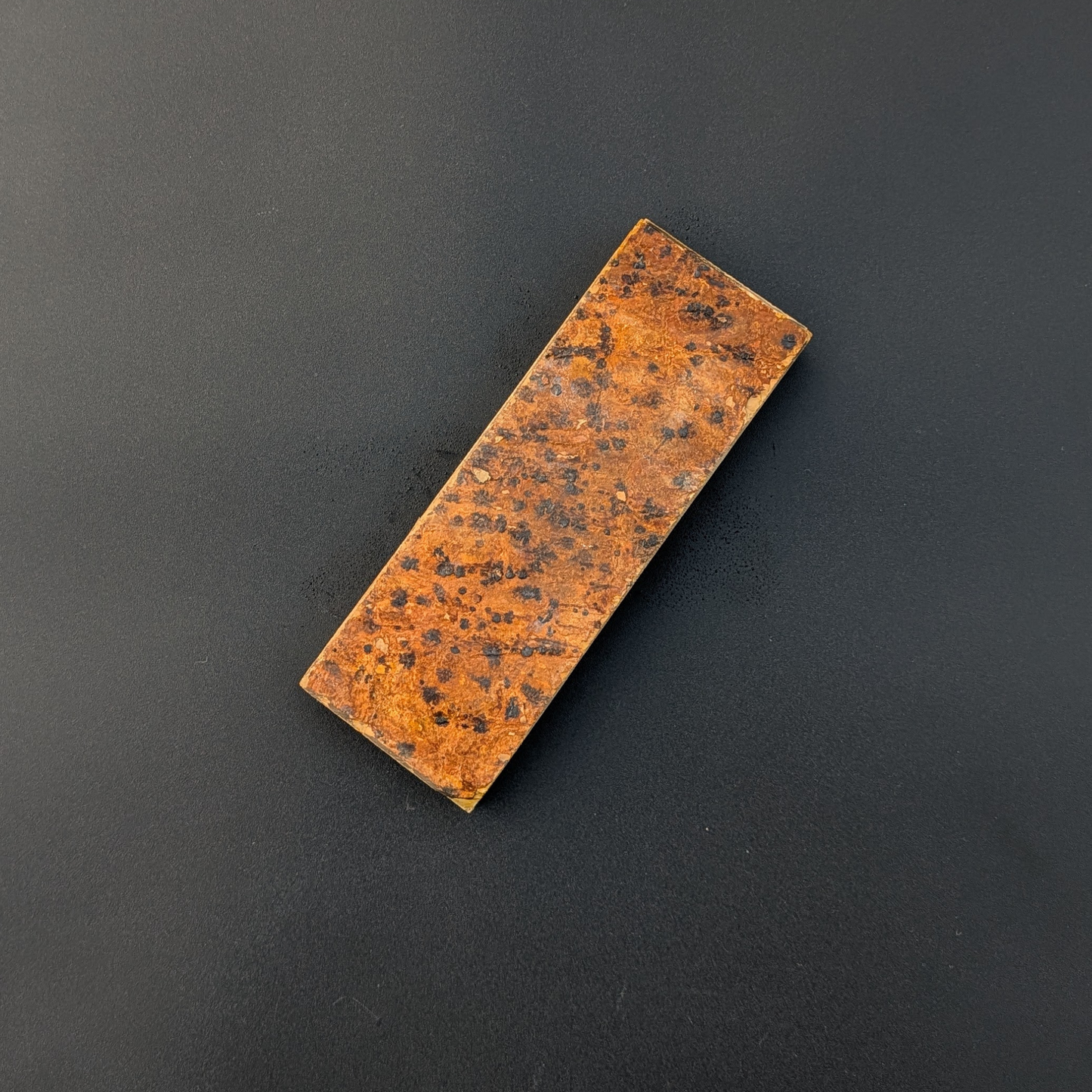
Awasedo Kiita  hue on the working face with a heavily mottled, rustic natural skin (kawa) on the reverse.
Shape: Rectangular bench stone with chamfered perimeter edges.
Visible Flaws, Inclusions & Structural Notes
Face Veining (Suji): A noticeable diagonal fissure line traverses the midsection of the working face, accompanied by fine hairline crazing near the upper-left quadrant. These do not seem to affect the sharpening / polishing action but should be monitored with a fingernail over time to ensure they remain benign during sharpening. Many sharpeners decide over time weather to dig out the vein with a steel point or leave it as is. 
Base Delamination / Corner Step: A visible horizontal crack/delamination step is present along one lower corner where the natural skin layer meets the sawn stone body.
Edge Chipping: Minor natural chipping along the bottom perimeter edges near the rustic skin boundary.
Stratification Lines: Pronounced sedimentary grain lines along the side profiles; All sides and back are sealed with transparent lacquer. 

care instructions

1. Preparation & Water Management
Splash-and-Go Only: Never soak your natural finishing stone in a water bath. Prolonged submersion softens the natural binders and risks cracking or delamination along natural mineral lines.
Surface Wetting: Mist or splash clean water onto the working face just before sharpening. Add water sparingly throughout your session to maintain a slick working surface.
Bench Placement: Place the stone on a non-slip rubber base or a dedicated wooden stone holder with gentle clamping pressure.
2. Slurry Generation & Sharpening
Soft to Medium Stones (Hardness 2.5–3.5): These stones naturally release their own slurry under light blade pressure. Let the auto-generated mud do the work; do not wash it away mid-session.
b Use a diamond plate (such as an Atoma 1200), a clean Tomo Nagura, or a Mikawa Nagura to raise a thin, milky slurry in 5 to 10 light circular passes before laying your blade flat.
Pressure & Technique: Maintain light, even pressure. Allow the semi-rounded silica particles in the slurry to break down naturally—this self-refining action creates the signature toothy edge and cloudy kasumi finish.
Slurry Thickness: If the mud becomes too sticky or pasty, add a few drops of water. If it is too thin, work the stone lightly to concentrate the abrasive particles.
3. Cleaning, Drying & Long-Term Care
Rinse Clean: When finished, gently rinse off steel swarf and residual slurry using room-temperature tap water. Do not use dish soap, detergents, or hot water.
Air Dry Indirectly: Wipe the stone dry with a clean towel and allow it to dry completely at room temperature, away from direct sunlight, heating vents, fans, or freeze-thaw cycles.
Storage: Store the completely dry stone flat on a shelf in a climate-controlled room. Avoid enclosing a damp stone in an airtight plastic box.
Edge Lapping: Keep the working surface flat by lightly dressing it with a fine diamond plate (Atoma 1200 or 400) under running water when dish patterns begin to form. Chamfer the outer top perimeter edges lightly to prevent edge chipping during blade passes.

View full details