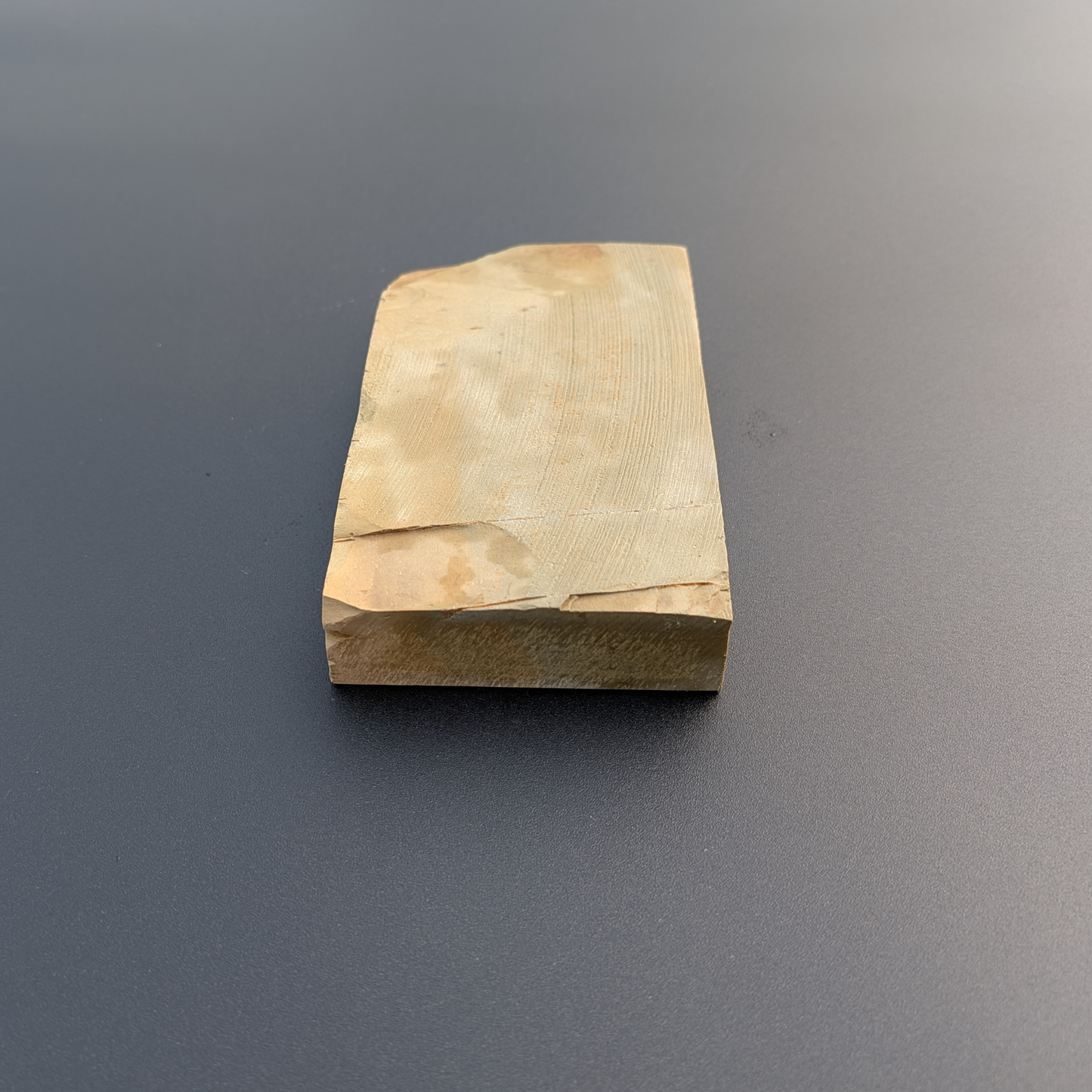
Shohonyama Shoubudani Iromono Tomae #055
Free U.S. shipping on orders over $500
Couldn't load pickup availability

dimensions
dimensions
Dimensions: 152 mm × 88 mm × 26 mm
Weight: 905 g
Approximate Density: ~2.60 g/cm³
Shōhonyama Shōbudani Iromono (正本山 菖蒲谷 色物)
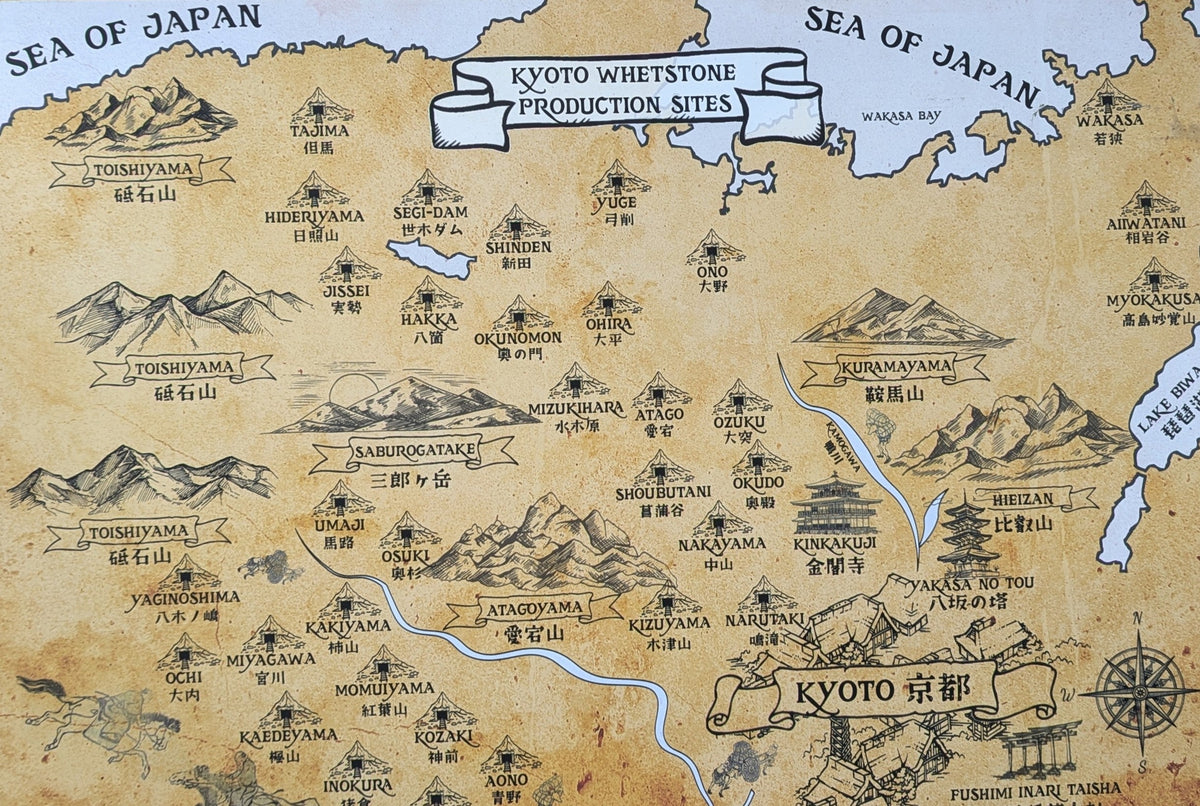
This is a fine grained Tomae. A Japanese natural finishing whetstone otherwise known as Awasedo. Originating from the renowned eastern mines of Shoubudani, Japan, this stone is celebrated by discerning sharpeners for its unique combination of mid-range hardnes (Lv. 3-3.5), refined slurry production, and distinctive finish. This stone is a shiage-to/awasedo, meaning it fits the top end of the shiage and into the awasedo stage. The grain size is comparable to approx. 8000-12000 grit synthetics. Featuring a relatively consistent hardness level thtoughout the stone, and controlled slurry feedback, it provides clean and efficient sharpening control while standing up to long-term use. The stone imparts a signature subtly textured "frost" finish that delivers an ideal balance of keen cutting edge and lasting bite, making it a versatile and treasured addition to any wherstone progression.
care instructions
care instructions
Initial Inspection & Cleaning: Before use, gently inspect your Japanese natural whetstone (JNAT) for any loose grit or debris, and wash the surface with clean water and a soft brush.
Soaking Guidelines: Understand your specific stone's hardness; softer stones (like Aizu or Amakusa) generally require a brief soak of 10 to 20 minutes, while harder, finer finishing stones (like Tomae or Suita) often perform best as splash-and-go stones requiring only surface hydration.
Avoiding Thermal Shock: Never submerge a cold or dry stone in hot water, and avoid exposing your JNAT to extreme temperature shifts, which can cause cracking or structural failure.
Slurry Generation: Build a natural abrasive slurry using a diamond plate, coarse stone, or a matching nagura (such as a Tsushima Nagura) to jump-start cutting action and condition the surface for your blade steel.
Water Maintenance: Keep the stone adequately lubricated with clean water throughout the sharpening session, periodically rinsing away accumulated swarf to maintain optimal feedback and cutting speed.
Drying Process: After sharpening, rinse the stone thoroughly under clean running water and allow it to dry completely in a well-ventilated, shaded area away from direct sunlight and artificial heat sources.
Long-Term Storage: Store your dried JNAT in a stable environment where it won't be subjected to heavy impacts, freezing temperatures, or high humidity fluctuations that could compromise its integrity.
Share