Tajima #tj73004
Tajima #tj73004
Free U.S. shipping on orders over $500
Couldn't load pickup availability
 Military & First Responders get a 10% discount! Click to verify.
dimensions
dimensions
Description & Identification
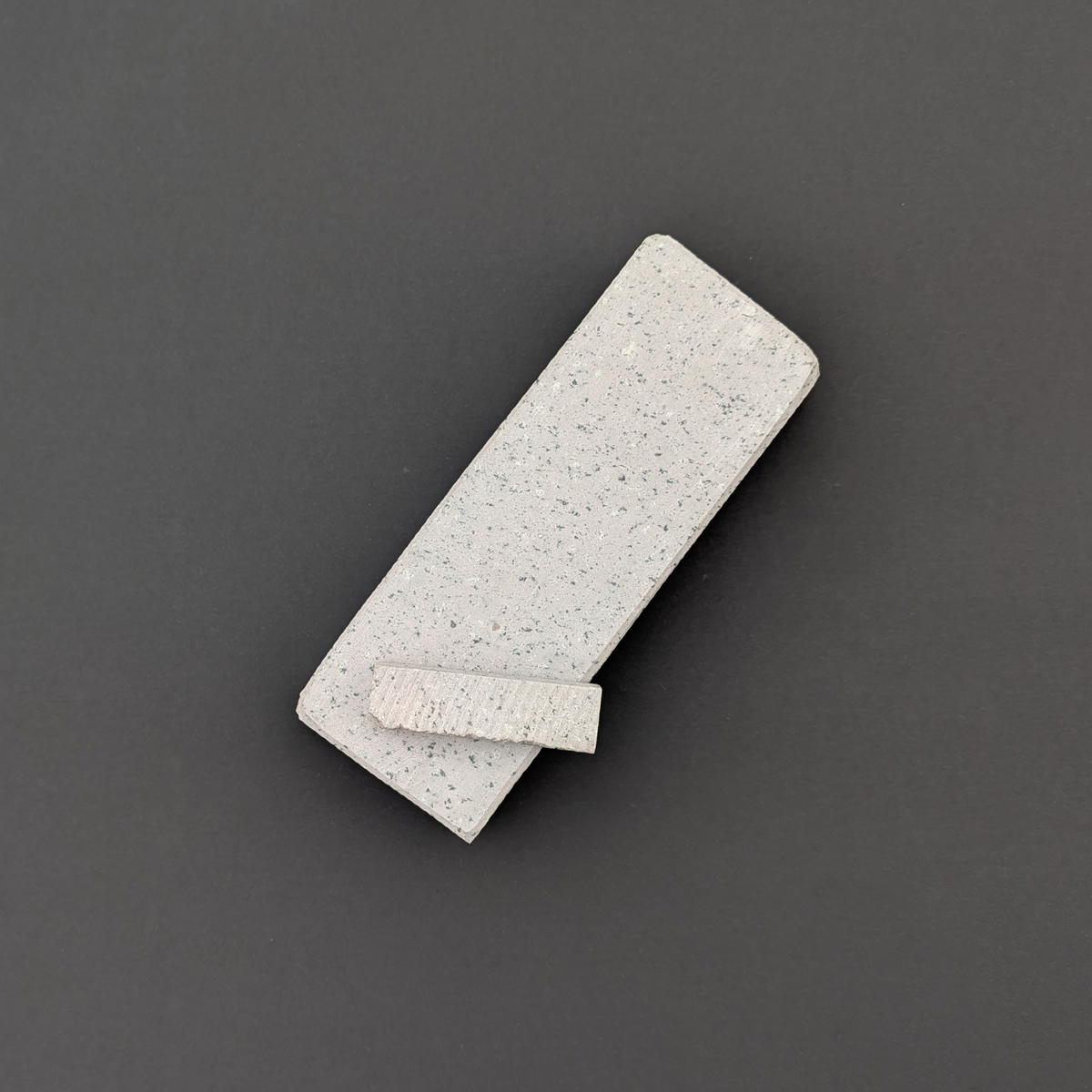
Stone Type / Provenance: This is a Japanese natural medium-grit whetstone (chu-toishi), commonly referred to Tajima sourced from Hyōgo.
Color & Grain Structure: It features a light ash-grey/off-white base Matrix uniformly peppered with distinctive dark specks (goma / sedimentary mineral inclusions). The texture is characteristic of sedimentary siltstone/sandstone typical of mid-grit Japanese naturals.
Accompanying Piece: It includes a matching (Tomo nagura/Slurry stone) cut from the same stone material, useful for cleaning the surface, pre-conditioning the bevel, or raising an initial slurry.
Dimensions & Weight: 210 mm × 80 mm × 45 mm, weighing 1,803 g. This places it squarely in the full bench-stone class (comparable to standard Type 30/40 bench formats), with substantial thickness to last a lifetime of shop use
.
Classification & Performance Characteristics
Category: Chu-toishi (Medium-grit sharpening stone).
Estimated Grit Equivalence: Approximately #1,000 – #1200 grit (synthetic equivalent), depending on slurry dilution, blade pressure, and surface conditioning.
Hardness: Lv 2.5 to 3.5 (medium to medium-firm). It offers comfortable tactile feedback with decent slurry generation under moderate tool pressure, without dishing excessively fast.
Cutting & Finish Profile: Excellent toothy, semi-matte/hazy finish on cladding and core steel. It serves as an ideal intermediate step between aggressive shaping stones and fine pre-finishers (such as Aizu or fine Suita), leaving a functional working edge with aggressive bite for utility and kitchen blades.
Markings & Stamps
Grade Stamp: A distinct oval seal stamped on the side reading 特選 (Tokusen), translating to "Specially Selected" or "Choice Quality."
Origin Stamp: A rectangular boxed stamp located near the opposite upper corner on the same flank, partially weathered/faded, denoting the regional distributor mark.
Flaws, Inclusions & Structural Condition
Perimeter Chips: Small breakout chips and irregular edging along the bottom corners and bottom edge bevels (visible on the underside), typical of sawn quarry blocks that have not received an aggressive secondary chamfer.
Saw Marks: Pronounced diagonal gang-saw / wire-saw striations across the sides and underside. These are strictly cosmetic on the sides/bottom.
Toxic Inclusions / Cracks: No visible toxic quartz veins (suji), major toxic fossil pockets, or destabilizing through-cracks are apparent on the working face. The dark speckling is homogeneous and benign, contributing to slurry friability rather than gouging blade bevels.
Sealing: The stone is sealed on all sides (minus the working surface).
Valuation & Pricing
care instructions
care instructions