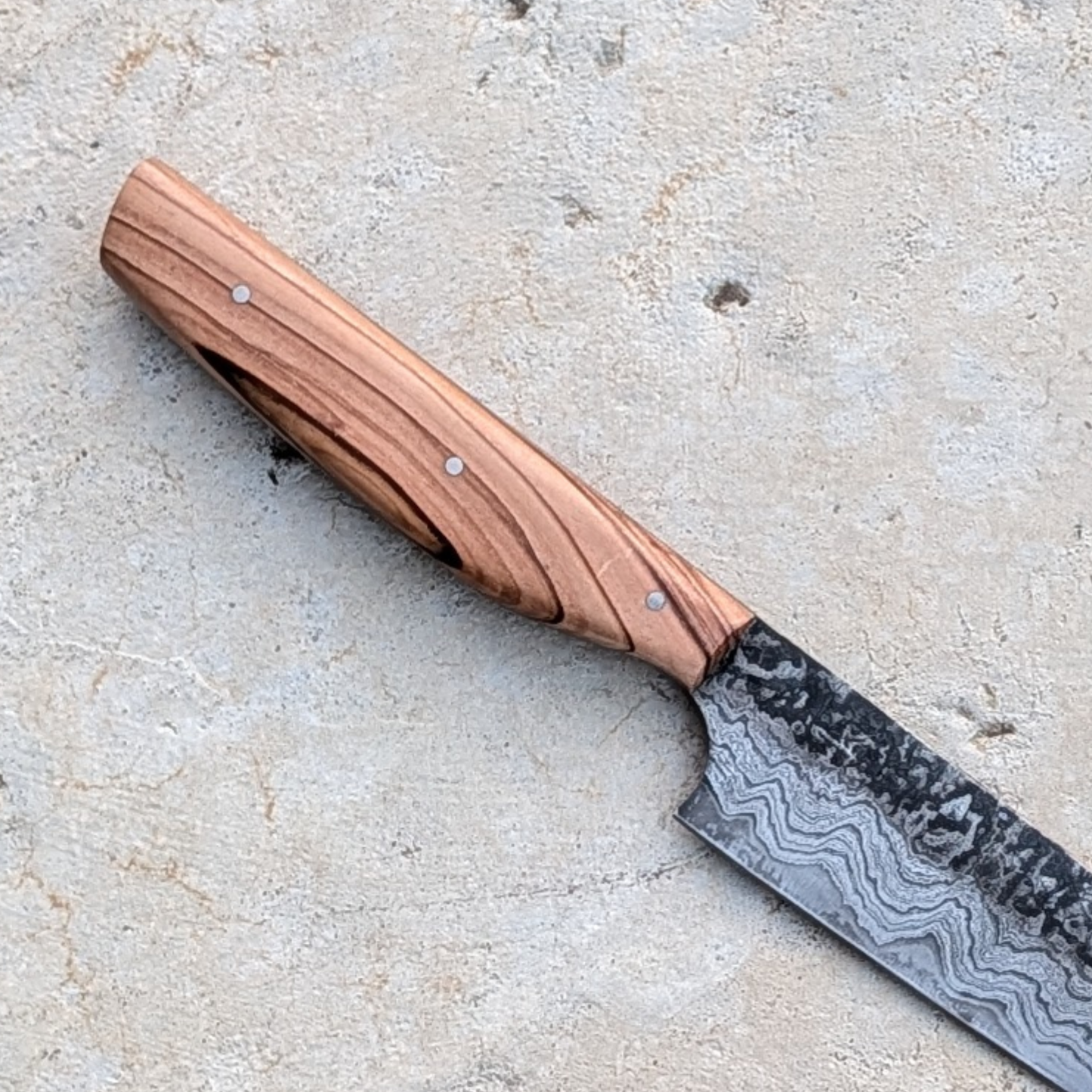
165mm Western Petty Knife, Olive
Free U.S. shipping on orders over $500
Couldn't load pickup availability

Materials
Materials
Handle Material: Authentic Bethlehem Olive Wood (Israel)
Sheath / Saya: Matching Olive Wood Saya
dimensions
dimensions
Overall Length: 10 ⅞" (276 mm)
Blade Length: 6 ½" (165 mm)
Handle Length: 4 ¼" (108 mm)
Weight: 3.4 oz (96 g) / 4.85 oz (137 g) with Saya
165mm Western Petty Knife, Olive
- Razor-Sharp Precision: Built for nimble detail and prep work, powered by an ultra-hard O1 carbon steel core that delivers laser-sharp cutting and lasting edge retention.
- Damascus clad: Clad in high-contrast carbon Damascus that shields the core against chipping, absorbs impact, and features a striking organic grain.
- Rich Olive Wood Grip: Balanced with a beautifully contoured Olive wood handle, offering a comfortable, fatigue-free grip for extended kitchen sessions.
- Included Saya: Complete with a matching custom wooden sheath (saya) for safe transport and blade protection.
Item Code: 0726006
care instructions
care instructions
Cleaning: Hand-wash the blade immediately after each use with mild dish soap and warm water, focusing on removing any acidic or salty residue that can quickly cause oxidation.
Drying: Thoroughly dry the entire knife, including the blade, handle, and bolster area, with a clean, lint-free cloth; never leave the knife in a sink or soak it, as moisture trapped in the handle can lead to swelling, cracking, or rot.
Handle Care: Apply a food-safe mineral oil or high-quality wood finish to the handle periodically to nourish the wood and maintain a protective barrier against moisture and environmental changes.
Blade Protection: When the blade is clean and completely dry, apply a thin layer of food-grade mineral oil or camellia oil to the carbon steel to prevent rust during storage.
Storage: Store the knife in a dry environment, such as a wooden knife block, on a magnetic wall strip, or in a knife roll; avoid storing it in a drawer where it can clash with other utensils, which risks damaging the edge or handle.
Sharpening: Maintain the edge using traditional, freehand sharpening techniques on natural Japanese whetstones; avoid pull-through sharpeners or electric grinding wheels, which can ruin the geometry and finish of high-carbon damascus blades.
Usage Constraints: Use the knife strictly for cutting food on wooden cutting board; avoid cutting through bone, frozen foods, or hard surfaces to prevent chipping or edge damage.
Share